Makers of Candle Cozies — And We Need to Tell You Something Important
I see candle cozies everywhere. . But something keeps me up at night: photos and videos of cozies (and others like them) wrapped snugly around candle jars with a flame burning inside.
Candle cozies are trending everywhere right now. Pinterest boards, TikTok videos, cottagecore mood boards. They're beautiful, and I understand the appeal completely. But safety education has not kept pace with the trend, and that worries me.
So let me say this as plainly as I can: a fabric cozy placed over a lit candle jar is a fire hazard. Full stop.
This post is meant to inform you, because responsible makers lead with honesty. I'll walk you through the science of why it's dangerous, which yarn types are riskiest, real fire statistics, and exactly when cozies are safe to use.
What Actually Happens When You Put a Cozy Over a Lit Candle Jar
When a candle burns, the flame melts the wax, and that hot liquid wax transfers heat directly into the glass jar from the inside out. Over time, the exterior of that jar gets dangerously hot. If you've ever touched a candle jar after it's been burning for a couple of hours and pulled your hand back quickly, you already know what I'm talking about.
Now imagine wrapping a fabric cozy around that jar. The cozy traps heat against the glass, acting like insulation around a hot surface. Instead of allowing heat to dissipate into the surrounding air, you're holding it right against the glass and accelerating the overheating process.
If a jar feels too hot to touch comfortably, it's already in dangerous territory. The glass is under thermal stress and at risk of cracking or shattering entirely. When glass shatters, hot wax spills out. The cozy is then in direct contact with an open flame or pool of burning wax, and ignition can follow in seconds.
The U.S. Fire Administration has found that a small flame can become a major fire in under 30 seconds. That's how fast this scenario escalates.
Burning a candle for more than three to four hours dramatically increases heat buildup and glass stress, compounding the risk if a cozy is present. The National Candle Association also states that candles should be kept at least 12 inches from anything that can burn. A cozy wrapped around the jar violates that rule at zero inches.
Not All Yarns Are Equal — But None Are Safe Over a Flame
I hear this a lot: "But my cozy is made from cotton" or "Isn't wool fireproof?" I understand the thinking, so let me walk through the facts fiber by fiber.
Acrylic yarn is the most common crochet yarn and, unfortunately, the most dangerous near heat. It's flammable, and once ignited, it melts into a sticky, burning plastic residue that spreads fire and causes severe burns. Fluffy or loosely textured acrylic can flash-ignite, with flames racing across the fabric surface in an instant.
Cotton yarn is more heat-tolerant than acrylic, with an auto-ignition temperature of approximately 390°C (734°F). But it's still classified as "very flammable." Pressed against a hot glass jar, cotton remains a serious risk.
Wool yarn is the most fire-resistant natural fiber, with an auto-ignition temperature of approximately 590°C (1,094°F). That's impressive, but wool is not fireproof. It should never be used as a cozy over a lit candle either.
There's another factor that makes crochet and knit fabrics especially risky: the open stitch structure. Those beautiful stitches create air pockets full of oxygen, which makes the fabric ignite more readily than tightly woven textiles.
The bottom line: no yarn type makes a cozy safe to use over a lit candle. The fiber only changes how fast the danger arrives.
The Numbers Behind Candle Fires Are Sobering
According to the National Fire Protection Association, U.S. fire departments respond to an estimated 5,894 home candle fires per year. Those fires result in 63 deaths, 532 injuries, and $286 million in property damage annually.
The U.S. Consumer Product Safety Commission puts the numbers even higher: more than 14,000 residential candle fires per year, approximately 170 deaths, and $350 million in property damage. That works out to roughly 20 home candle fires reported every single day.
Here's the statistic that hits closest to home for this conversation: over 50% of all candle fires started because a flammable decoration or fabric item was placed too close to a lit candle. That is the exact scenario a cozy creates.
Thirty-six percent of candle fires start in the bedroom, where decorative items like cozies are most likely to sit near candles. December is the peak month for candle fires, and 11% of December candle fires begin with decorations, compared to only 4% the rest of the year. That's a critical warning for holiday cozy gifting season.
In December 2025, an unattended candle caused a house fire in Charlotte, North Carolina, resulting in $325,000 in property damage. One candle. One moment of inattention.
I want to be transparent about something: no fires caused exclusively by a fabric cozy over a lit jar have been isolated in public fire databases. But the leading cause of candle fires overall is flammable fabric placed too close to a flame or hot glass. The absence of a documented case does not mean the risk is theoretical. It means we haven't been tracking it specifically.
One more number worth knowing: the rate of injuries per 1,000 candle fires is nearly three times the rate for all other home fire causes combined.
Cozies Are Meant for Decor — Here Is Exactly When to Use Them
I don't want you to stop loving candle cozies. They're genuinely beautiful, intentional objects. They just belong in specific contexts.
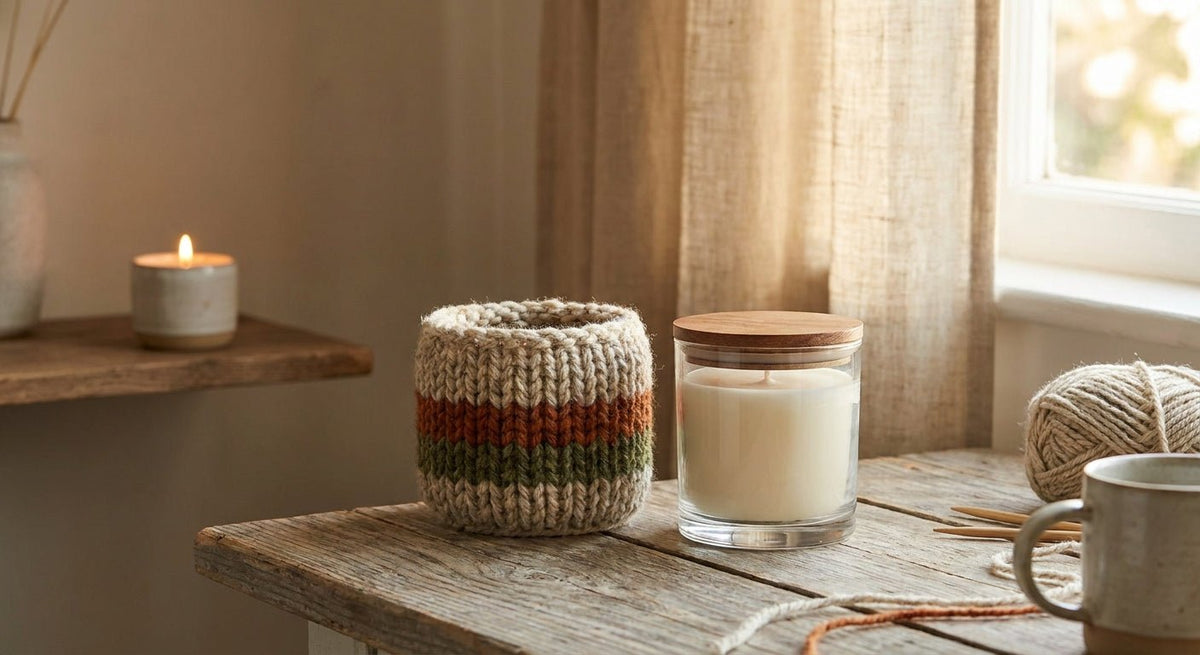
Safe use #1: Place a cozy over an unlit candle jar as shelf décor, a centerpiece, or a vignette accent. The candle inside is purely decorative, and the cozy adds handmade warmth to any room.
Safe use #2: Pair a cozy with a battery-operated LED flameless candle. LED candles produce no open flame, no dangerous heat, and create the same warm glow aesthetic. They're surging in popularity for exactly this reason, and they're the perfect companion for a cozy.
Safe use #3: Use a cozy as a gift wrap alternative. Slide it over a candle jar as beautiful packaging, and include a note reminding the recipient to remove it before lighting.
Every Stitched Creations cozy is made with care and intention for decorative use, and every order ships with clear usage guidance so you always know how to enjoy your piece safely. That's my responsibility as the maker, and I take it seriously.
Gifted cozies carry an especially important risk: the person receiving the gift often has no idea the cozy isn't safe over a lit candle. If you're gifting a cozy, please include a safety card or a handwritten note. That small step could prevent something terrible.
A Note From Susan: Why We're Talking About This
Before I was a maker, I was a nurse. Safety isn't a brand policy for me. It's part of who I am, wired into how I think about everything I create and send out into the world.
I've seen many products used over lit candles by well-meaning customers who simply didn't know the risk. That's what motivated me to write this post. Being a responsible maker means more than beautiful craftsmanship. It means making sure every piece is used in a way that keeps people safe.
Custom orders are always welcomed, and safety guidance is always included. If you have questions, please reach out. Share this post with anyone who owns a candle cozy. And know that when you buy handmade from a thoughtful maker, you're buying from someone who genuinely cares about you and your family.
The Safe, Beautiful Bottom Line
Candle cozies are a wonderful piece of handmade artisan décor. They add warmth, texture, and personality to any space. And they must never be placed over a lit candle.
Remember the three safe uses: unlit decorative candles, LED flameless candles, and gift packaging (with a safety note included).
If this post helped you, please share it, especially as we head into holiday gifting season, when cozies are frequently given as gifts without any safety context. A quick share could make a real difference for someone you care about.
Make beautiful things. Use them wisely. And take care of each other.
With love and every stitch,
Susan