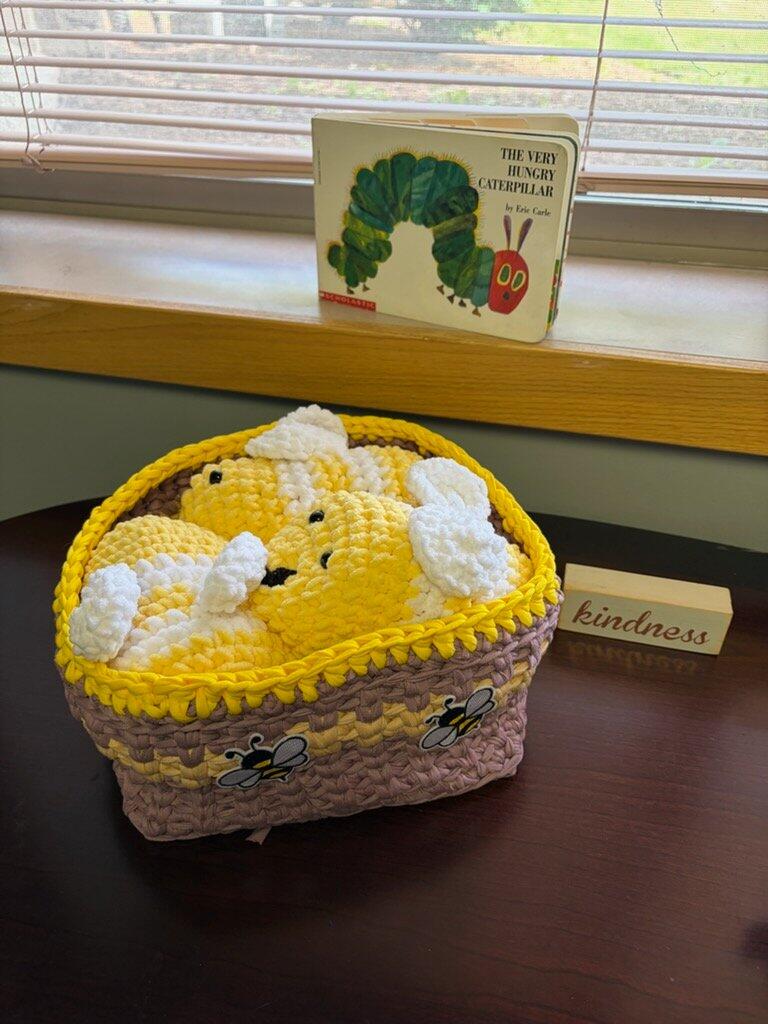
As a former nurse turned full-time crochet maker, I learned early that precision matters. In nursing, careful attention to detail kept people safe. In my studio, that same precision goes into every stitch I create. But the care doesn't stop once a piece leaves my hands. How you wash and dry a handmade crochet item determines whether it stays beautiful for years or loses its shape after a single wash. I wrote this guide to share exactly what I do with my own pieces, so you can keep yours looking their best.
Why Proper Care Matters for Handmade Crochet
Every handmade crochet piece represents real hours of focused, skilled labor. Unlike machine-made textiles, each item carries natural variations in tension and stitch that reflect the maker's hand. These variations are part of what makes handmade special, but they also mean the piece needs gentler treatment than something pulled off a store shelf.
The knitting and crochet market was valued at $9.48 billion in 2024, and it continues to grow. More people than ever are bringing handmade textiles into their homes for the first time. Knowing how to care for your piece is essential. Proper washing protects your investment, honors the maker's labor, and keeps a beautiful item out of a landfill. That's slow fashion in practice: buying with intention and caring with purpose.
The Golden Rules Before You Wash Anything
Check the fiber content first. 100% cotton behaves very differently from jute, hemp, or blended yarns. The care method that works perfectly for one fiber can damage another.
Before the first wash, perform a simple color bleed test. Dampen a small, hidden area of the item, press a white cloth against it, and check for color transfer. This is especially important for richly colored or hand-dyed yarns.
A few hard rules apply across every fiber type:
- Never use bleach or harsh detergents. They weaken fibers and cause irreversible color fading.
- Skip fabric softener entirely. It coats yarn fibers, alters their natural texture, and causes long-term structural damage.
- When in doubt, hand wash in cool water with a small drop of mild, fragrance-free detergent. You can't go wrong with that approach.
How to Wash 100% Cotton Crochet Items
Cotton is the most popular fiber in handmade crochet. About 31% of crochet consumers prefer cotton yarn, and for good reason: it's soft, durable, and breathable. The good news is that 100% cotton crochet items can be machine washed, but preparation is everything.
Always place the item inside a mesh laundry bag or a pillowcase before loading it into the machine. I personally recommend the pillowcase method because most people already have one at home. It prevents tangling, snagging, and stretching against other items in the drum.
Use a front-loading washing machine only. This is critical. Top-loading machines with a central agitator are genuinely dangerous for crochet. The open loops of crochet fabric can wrap around the agitator's fins during the spin cycle, causing catastrophic yarn ripping and unraveling. I've heard too many heartbreaking stories from customers who learned this the hard way.
Set the machine to a cold, delicate cycle and keep the spin speed as low as possible. Use a small amount of gentle, fragrance-free detergent. This is especially important for baby items like blankets and clothing sets, where sensitive skin is a concern.
Drying Crochet the Right Way: Always Flat, Never Hung
This is where most people make their biggest mistake. Never hang a wet crochet item to dry. Wet crochet stitches can retain up to three times their dry weight in water. When you hang a soaking wet piece, all of that weight concentrates on the top rows, permanently distorting the shape. Cotton is especially heavy when wet and will sag and elongate if gravity is allowed to pull on it.
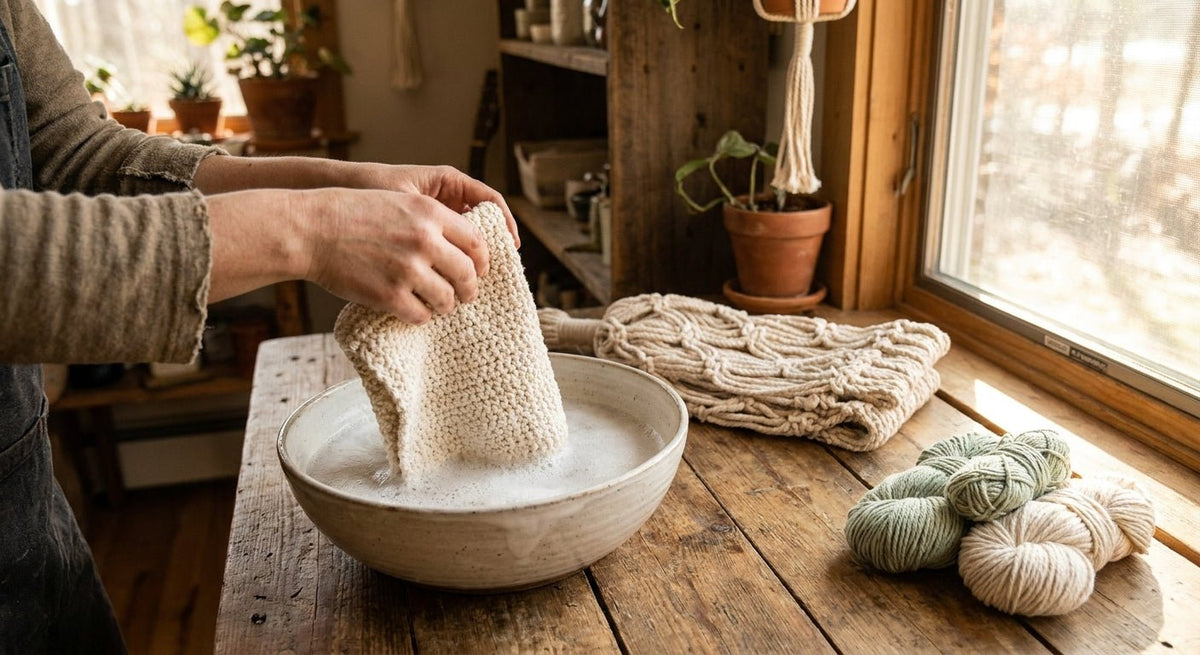
After washing, resist the urge to twist or wring out the item. Instead, gently squeeze or press out excess water, then lay the piece on a clean, dry towel. Roll the towel up with the item inside to absorb as much moisture as possible.
Next, lay the item flat on a clean surface or a drying rack. While it's still damp, gently reshape it to its original dimensions. Reshaping while damp is the single most important step for maintaining the original form of the piece. Once crochet dries in a distorted shape, it's very difficult to correct.
For cotton shawls, wraps, and ponchos, like those in my Handmade Shawls, Wraps and Ponchos collection, laying flat to dry preserves the drape and stitch definition that make each piece wearable and beautiful wash after wash.
Caring for Macramé Baskets and Purses: Spot Clean Only
Macramé baskets and purses require a completely different approach than crochet wearables. If your macramé piece has a wood or vinyl base, it should never be submerged in water. Submersion can loosen knots, warp the overall design, and permanently damage or stain non-textile components.
For macramé items, spot cleaning is the correct method:
- Dampen a cloth or sponge with a small amount of mild detergent.
- Blot the soiled area gently. Do not rub. Rubbing spreads the stain and damages the knot structure.
- Allow the item to air dry completely in a well-ventilated area before storing or using it again.
Macramé items made from jute or hemp fibers should avoid soaking entirely. Excessive moisture weakens those natural fibers significantly over time. Machine washing and steam cleaning should also be avoided for all macramé bags and purses, as these processes distort knot structure and can cause irreversible design damage.
Common Washing Mistakes That Ruin Handmade Crochet
Here are the mistakes I see most often. Avoiding these will save your pieces:
- Wringing or twisting after washing. This distorts stitches and permanently misshapes the piece.
- Using a top-loading machine with an agitator. This is the single most destructive mistake for open-stitch crochet.
- Washing in hot water. Heat causes cotton to shrink and can felt certain yarn types irreversibly.
- Hanging the item to dry. Gravity does real, measurable damage to wet crochet.
- Using fabric softener. It feels harmless but coats and degrades yarn fibers over time.
- Skipping the mesh bag or pillowcase. Even a gentle cycle can cause tangling and snagging without this simple layer of protection.
- Not reshaping while still damp. Once dry in a distorted shape, correction is extremely difficult.
A Note on Gifting: Always Include a Care Card
If you're giving a handmade crochet item as a gift, especially baby blankets, clothing, or apparel, always include a small care instruction card or tag. Use standard laundry symbols so the recipient knows at a glance how to care for the piece.
This is a best practice across the crochet maker community, and it positions both the gifter and the maker as thoughtful and professional. A care card protects the recipient's investment and ensures the piece is loved for years, not accidentally ruined on the first wash.
At Stitched Creations, every piece I ship includes care instructions. I think of it as the final stitch in my commitment to each item I make. Precision doesn't end when the last loop is pulled through.
Keep Your Handmade Pieces Beautiful for Years to Come
The core rules are simple: cold water, delicate cycle, mesh bag or pillowcase, no agitator, no wringing, dry flat, and reshape while damp. For macramé with non-textile bases, spot clean only and never submerge.
Proper care is an act of slow fashion. An estimated 30% of U.S. consumers have now adopted slow fashion behaviors, choosing to buy less, repair more, and seek quality handmade alternatives. Extending the life of a handmade piece reduces waste and honors the labor behind it.
Store your clean, fully dry crochet items folded (not hung) in a breathable space to prevent pilling and moisture buildup. Every piece I make at Stitched Creations is crafted one at a time, with intention. Treating it gently ensures it remains a cherished part of your home or wardrobe for years to come.