One Piece, Three Silhouettes: The Secret Your Wardrobe Is Missing
Here's something most women don't realize: a shawl, a poncho, and a wrap don't have to be three separate purchases. A single handmade shawl can be styled as a traditional shoulder drape, a belted wrap, a crisscross top, a poncho, and even a headscarf. One piece, countless looks.
By the time you finish this guide, you'll know exactly which silhouette suits your body type, your lifestyle, and your wardrobe. And you're getting this advice from someone who actually makes these pieces by hand.
I'm Susan Beleck, a former nurse turned full-time artisan here in Wisconsin, and I've spent years constructing, wearing, and styling handmade outerwear. Everything I share here comes from hands-on experience at the craft table and in front of the mirror.
Shawl, Wrap, or Poncho? Here's What Actually Sets Them Apart
The confusion is understandable. Retailers use these terms interchangeably all the time. But each silhouette has a distinct identity, and knowing the differences helps you shop smarter.
A shawl is a flat, loose garment, typically rectangular, square, or triangular. It's the most versatile of the three—it can be draped, pinned, belted, or folded into nearly any shape you want. Think of it as a blank canvas for styling.
A wrap is generally smaller and narrower than a shawl. It's primarily a fashion accessory, ideal for casual outings, evening wear, and light layering. It does one or two things beautifully, but it doesn't have the same shape-shifting range.
A poncho is a single piece of fabric with a hole for the head. It's sleeveless, free-flowing, and has roots in pre-Inca South America. If you've seen a ruana, that's a poncho variant with a front slit from neck to hem, which allows you to wrap and drape the fabric in multiple ways. It's a lesser-known option, but incredibly wearable.
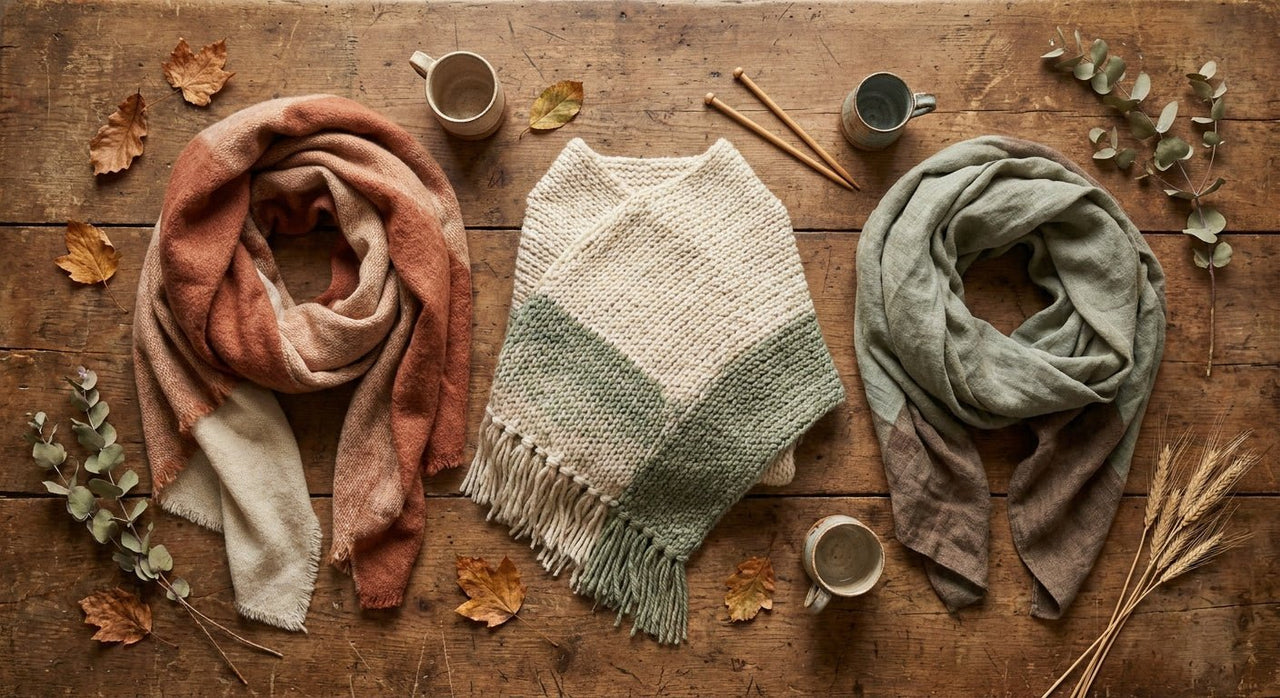
Fabric matters too. Shawls come in silk, cashmere, wool, chiffon, and crochet yarn, each suited to different seasons and occasions. A crochet poncho in open stitch feels completely different from a dense wool wrap, and both have their place.
Six Ways to Wear a Shawl (and Why It's the Ultimate Wardrobe Accent)
A shawl isn't just something you throw over your shoulders when you're cold. It's a wardrobe accent that adds color, texture, and personality to clothes you already own, without requiring a new outfit.
Here are six distinct ways to style one:
- Traditional shoulder drape. The classic. Fold or leave open, let it hang naturally. Simple, elegant, and perfect for evenings out.
- Belted at the waist. This is the styling trick that transforms a shawl from casual to polished. Drape it over your shoulders, then cinch it with a narrow belt at the waist. It's especially effective over maxi dresses, kurtas, or long skirts, giving you a defined silhouette while keeping things cozy.
- Criss-crossed into a top. Pull each end across your chest and tuck or tie behind your back. You get a layered, structured look that works over a tank top or fitted tee.
- Pinned into an asymmetrical poncho. Fold your shawl in half, drape it over one shoulder, and secure with a brooch or kilt pin. Instant poncho silhouette, no head-hole required.
- Worn as a headscarf. Fold into a triangle, drape over your head, and tie or let the ends hang. Beautiful for windy days, bad hair days, or just a different look.
- Looped as an infinity wrap. Twist the shawl into a long loop and drape it around your neck twice. It functions like an infinity scarf but with more volume and visual interest.
A quick tip most buyer's guides skip: small accessories make a big difference. Brooches, kilt pins, and narrow belts help secure these styles so you're not constantly readjusting. I keep a few on hand specifically for this purpose.
The shawl as coat alternative is another favorite of mine. Drape it over your shoulders and tie the ends behind your back. It stays put, keeps you warm, and works as lightweight outerwear when a jacket feels like too much.
Handmade crochet shawls with open-stitch patterns or fringe detail are especially suited to this multi-wear approach. The texture gives each styling method a different visual effect, and the natural drape of hand-crocheted yarn moves with your body in a way that machine-made fabric simply doesn't.
Which Silhouette Suits Your Body Type?
Here's something I love about handmade wraps and shawls: they're inherently adjustable and size-inclusive. Unlike structured outerwear with fixed seams and sizing, these pieces mold to your body however you style them.
Athletic builds: Ponchos and ruanas are your friends. They balance broader shoulders and create soft, flowing proportions. Choose mid-thigh or longer lengths to elongate your frame.
Curvy figures: A structured shawl or ruana with a narrow belt at the waist highlights your silhouette and adds definition without bulk. The belt is doing the heavy lifting here, so don't skip it.
Petite frames: Wraps and lightweight shawls worn asymmetrically or as a single-shoulder drape keep things proportional. Avoid heavy, oversized ponchos that can overwhelm a smaller frame.
All figures: The universal styling principle is simple. Balance volume on top with slim-fitting bottoms, and let the wrap be the statement piece. Leggings, skinny jeans, or fitted trousers work perfectly underneath.
And here's where handmade pieces have a real advantage: you can request a custom order with specific lengths, yarn weights, and drape styles to suit your exact proportions. That's something mass-market options simply can't offer.
All-Season Versatility: Shawls and Wraps Aren't Just for Winter
If you think shawls belong in a winter-only category, it's time to reconsider. Sheer chiffon and open-stitch crochet shawls work beautifully for spring and summer layering. They breathe, they drape, and they look intentional rather than heavy.
The 2026 trend is clear: drape over bulk. Lightweight, lace-panel, and openwork shawls are replacing heavy knits as the go-to layering piece. Think beach cover-ups, transitional weather layers, evening wraps over sundresses, and that essential layer for overly air-conditioned offices.
Crochet clothing hit a Google Trends score of 100 in August 2025, confirming year-round demand that goes well beyond holiday gifting. The interest isn't seasonal; it's sustained.
Natural fibers breathe well across seasons, which makes handmade pieces from eco-conscious materials a smart all-year investment. A single well-made shawl can carry you from a chilly spring morning to a breezy summer evening without missing a beat.
Why a Handmade Shawl or Wrap Makes the Most Thoughtful Gift
The numbers tell a compelling story: 65% of consumers have purchased personalized gifts recently, and 80% believe personalized gifts are more thoughtful than generic alternatives. On top of that, 80% of people prefer eco-friendly gifts that send a positive message.
A handmade, natural-fiber shawl or wrap checks every one of those boxes. It's wearable, personal, and made with intention by a real maker.
At Stitched Creations, I welcome custom orders where buyers choose colors, yarn weights, and stitch patterns to match the recipient's wardrobe and personality. The same precision and patience I brought to patient care as a nurse goes into every single stitch. For gift-givers who want something made with heart, that story matters.
Finding Your Perfect Piece: What to Look for When Buying Handmade Outerwear
When you're ready to choose, think about three things: silhouette (shawl, wrap, or poncho), fabric weight (heavy wool for warmth vs. open crochet for layering), and length (longer elongates, shorter suits petite frames).
Remember that handmade pieces have natural variations. No two are identical, and that's a feature, not a flaw. It means you're wearing something truly one-of-a-kind.
If you have a specific color palette or drape style in mind, consider a custom order. I make each piece by hand here in Wisconsin, and I genuinely welcome questions, custom requests, and conversations about finding the right fit. Your perfect piece might be one conversation away.